

Listen to the article
Data breaches and a demand for stricter security measures are inspiring companies to invest in obtaining a System and Organizational Controls (SOC) 2 report. Without one, businesses can lose deals or fail audits. Companies that work with a SOC 2 consulting partner improve their funding and security posture in various industries. Proactive security measures like SOC 2 reports are critical in the current cybersecurity climate.
The Importance of SOC 2 Consulting
An SOC 2 audit is an assessment of a company’s security controls. Businesses undergo SOC 2 Type 1 and Type 2 audits. Type 1 refers to the design of an organization’s security controls, whereas Type 2 measures the effectiveness of that design over time. Organizations can engage in either type. Essentially, a SOC 2 report helps companies boost their security measures and prove to customers that their data is safe.
Data breaches are becoming more common as technology, such as AI, advances. Breaches can cost companies over a billion dollars in some cases. Adhering to SOC 2 not only boosts a company’s reputation but can also reduce costs. The right consulting partner acts as an expert guide, translating the complex SOC 2 framework into a clear and manageable roadmap. This guidance not only saves significant time and internal resources but also dramatically increases the likelihood of a successful audit.
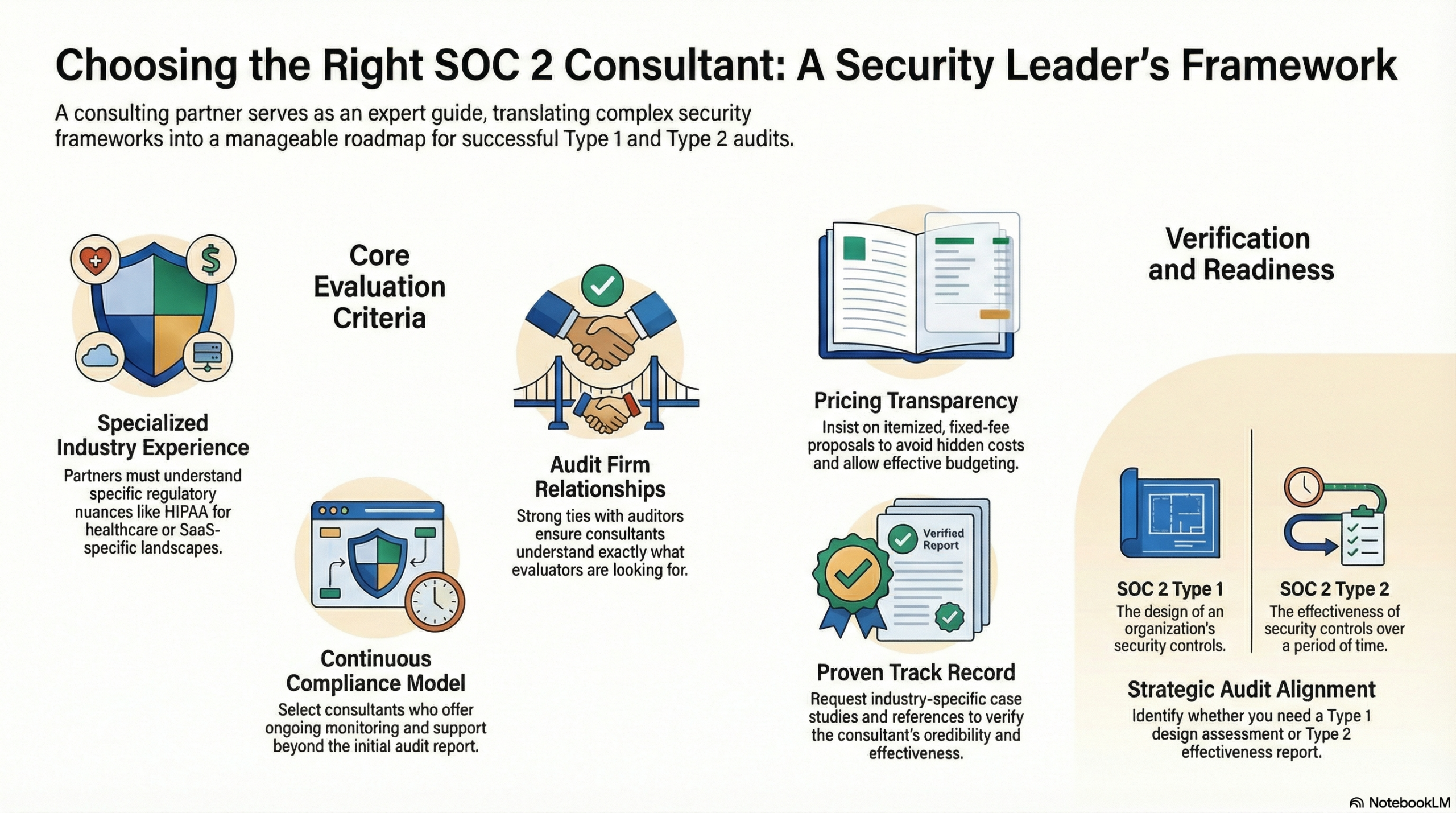
Criteria for Evaluating SOC 2 Consultants
Finding the right partner is essential to having a beneficial SOC 2 consulting experience. The following are criteria for companies to consider as they begin searching.
1. Industry Experience
The consultant should have significant industry experience. Familiarity with technologies like cloud-native and SaaS is beneficial, too. There are compliance nuances across industries, such as health care and finance, so good partners should possess expertise in many areas.
For example, Compass IT Compliance is a consulting partner with experience in multiple industries, including manufacturing, technology, nonprofits, financial services, hospitality, retail, higher education and health care. This diverse experience allows it to tailor SOC 2 readiness assessments to specific regulatory landscapes, such as mapping controls to HIPAA requirements for health care clients.
2. Ongoing Support
SOC 2 is an ongoing process, so companies should choose consultants who demonstrate a continuous compliance model. This helps organizations remain compliant during annual audits and incorporates policy updates and period checks. While leveraging ongoing support, companies should ensure the partner stays up to date on current practices and adopts them accordingly to help organizations succeed in audits.
For example, Thoropass offers constant monitoring and risk mitigation to support businesses beyond the first SOC 2 report. Its integrated platform provides a single view of the compliance posture, with automated checks and evidence collection to simplify continuous monitoring.
3. Audit Firm Relationships
Companies have two options when seeking a SOC 2 report. They can use a single firm for consulting and auditing, or work with separate firms. Working with a consultant who has strong relationships with audit firms makes the process smoother. It also ensures the partner understands what the auditors are looking for when evaluating companies for SOC 2.
Consulting partners with specific compliance licenses also demonstrate a clear understanding of audits. A partner with substantial knowledge is better equipped to help companies pass the audit and receive a solid SOC 2 report.
4. Pricing Transparency
Companies should avoid consultants who only offer vague proposals. They must seek out partners who provide detailed quotes, with each cost itemized, including audit fees and specific consulting rates. Some consultants charge a fixed fee or separate expenses for the time and materials used. Ask about potential hidden fees or the reasons for pricing changes as the process continues. Organizations can create lists with essential pricing and timeline questions to ask potential partners.
A partner with complicated, unclear pricing is not a good sign. For example, Baker Tilly has a billing and payment helpdesk for further clarification of its service prices. This commitment to transparency is often reflected in their practice of providing customized, fixed-fee proposals for SOC 2 engagements, which helps clients budget effectively without unforeseen costs.
5. Track Record
Businesses should evaluate the consulting partner’s track record to determine the validity of their process. Ask the partner for specific case studies, preferably from experiences with similar companies. Organizations can then ask the companies in the studies particular questions about their experience working with the partner.
This knowledge should help businesses decide whether the consultant is credible. If the partner does not provide case studies, businesses can search for reviews online. However, it may be a warning sign if the consultant offers no references initially.
Ensure Compliance With a Consultant
Choosing a SOC 2 consultant is a strategic decision that requires many considerations. SOC 2 reports impact customer trust and security. Companies can utilize the framework outlined above to choose the right partner and ensure compliance.

As the Features Editor at ReHack, Zac Amos writes about cybersecurity, artificial intelligence, and other tech topics. He is a frequent contributor to Brilliance Security Magazine.
.
.
Additional Resource
Video Overview
Follow Brilliance Security Magazine on LinkedIn to ensure you receive alerts for the most up-to-date security and cybersecurity news and information. BSM is cited as one of Feedspot’s top 10 cybersecurity magazines.