

In Episode S8E4 of the Brilliance Security Magazine Podcast, host Steven Bowcut sits down with Dr. Catherine Knibbs, CEO of Children and Tech, trained child cyber trauma psychotherapist, author, and pioneer of Cybertrauma Theory. Fresh off being named one of the world’s Top 20 Most Inspiring Women in Cyber for 2026, Catherine brings a distinctive and deeply important perspective to the conversation—one that connects cybersecurity, online safety, child development, trauma, and mental health. Together, they explore why the digital risks children face cannot be understood only as technical problems, and why cybersecurity leaders, parents, educators, and policymakers need a broader framework for thinking about harm in online environments.
Summary
In this episode, Steven Bowcut and Dr. Catherine Knibbs examine the hidden human costs of digital life for children and young people. Catherine begins by sharing what led her into this unusual area of work and why she believes the cybersecurity community must expand its understanding of online harm. Rather than viewing digital risks only through the lens of devices, platforms, or threat categories, she explains why children’s online experiences must also be understood in emotional, psychological, developmental, and relational terms.
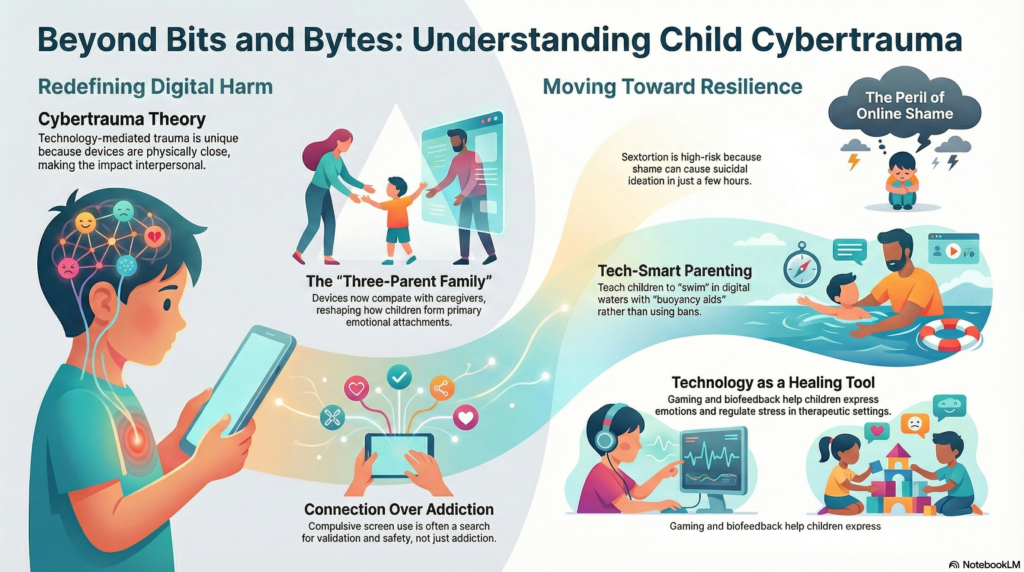
A major focus of the conversation is Catherine’s Cybertrauma Theory. She explains what cybertrauma means, how digitally mediated harm can differ from trauma that occurs in physical spaces, and why online experiences can leave deep and lasting effects even when adults fail to recognize the seriousness of what has happened. The discussion highlights the fact that online harm is not always visible, and that the effects can surface in behavior, attachment patterns, emotional regulation, and a child’s sense of safety.

Steven and Catherine also dig into her concept of e-tachment, which describes the way digital environments and online interactions can shape attachment behaviors. Catherine explains why what is often dismissed as screen addiction, overuse, or compulsive online engagement may actually be a sign that a child is seeking connection, validation, predictability, or emotional refuge. That leads into a broader discussion of how digital life is reshaping family relationships, including Catherine’s warning about the “three-parent family,” where devices increasingly compete with caregivers for a child’s attention, comfort, and developmental influence.
The conversation also addresses the range of harms children may encounter online, including cyberbullying, grooming, exploitative content, manipulation, radicalization, and other forms of harmful exposure. Catherine discusses which risks remain underestimated and why many adults still misunderstand the pathways through which children become vulnerable online. Rather than promoting panic or blanket restrictions, she argues for a more informed and practical approach—one rooted in what she describes as being tech-smart and pro-parenting.
Another compelling part of the episode focuses on recovery and resilience. Catherine explains how technology itself can sometimes be used therapeutically through tools such as gaming, biofeedback, neurofeedback, and other digital techniques that help children express emotion, regulate stress, and process difficult experiences. This gives the episode a nuanced perspective: technology is not presented simply as the source of harm, but also as something that can be used thoughtfully in support of healing.
Steven and Catherine also discuss the growing use of digital platforms, AI tools, and online systems in child-facing settings such as education, care, and therapy. Catherine outlines the privacy, ethical, and safeguarding concerns organizations must consider when using such systems in sensitive environments. The episode closes with practical guidance for cybersecurity leaders, educators, parents, and policymakers, including the mindset shifts Catherine believes are most urgently needed if society is to better protect children in a digitally saturated world.
About Our Guest

Dr. Catherine Knibbs is the CEO of Children and Tech, a trained child cyber trauma psychotherapist, author of seven books focused on children and the internet, and the pioneer of Cybertrauma Theory. Her work sits at the intersection of cybersecurity, online safety, child development, and trauma-informed care. She is widely recognized for helping professionals and organizations better understand the emotional and psychological impacts of digital harm on children and young people. In 2026, she was named one of the world’s Top 20 Most Inspiring Women in Cyber.
Click the image below to listen to this Brilliance Security Magazine Podcast episode.

Additional Resources
Books
https://www.childrenandtech.co.uk/shop
Video Overview
Infographic

Steven Bowcut is an award-winning journalist covering cyber and physical security. He is an editor and writer for Brilliance Security Magazine as well as other security and non-security online publications. Follow and connect with Steve on Instagram and LinkedIn.