

Social engineering is one of the most important cybersecurity topics schools can teach today. Instead of starting with firewalls or software vulnerabilities, many cyber incidents begin when someone receives a convincing message and responds too quickly. Social engineering uses human interaction and persuasion to gain information or access.
For K-12 schools, this topic deserves early attention. Educational facilities manage large amounts of personal and financial information while often working with limited cybersecurity resources. Cyber incidents affect this sector regularly, which makes student awareness just as important as technical safeguards.
When schools teach students how to recognize social engineering, they help build safer digital habits that support learning, communication and responsible technology use.
What Social Engineering Looks Like for K-12 Students
Social engineering aimed at young people usually appears in familiar digital spaces. They may see it in email, text messages, social media, games, learning platforms or QR codes. These tools already play a big role in daily school life. Students will benefit from learning how to review what they see.
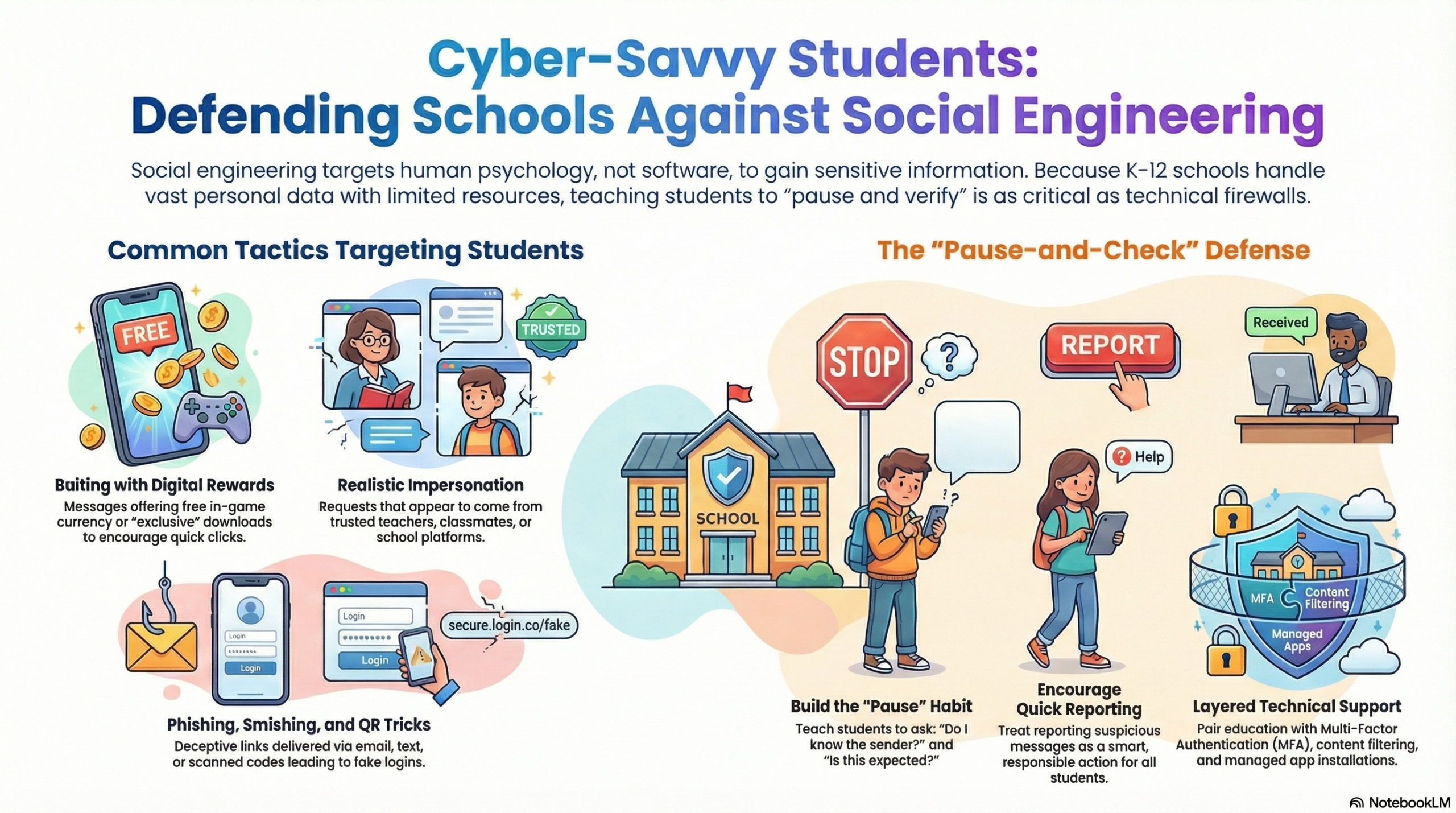
For younger students, social engineering often uses baiting. A message may offer free in-game currency, bonus rewards, or a special download to encourage a quick click or a password share. Children often respond quickly to excitement, urgency or curiosity since they are still building online judgment and experience.
For middle and high school students, the messages often look more realistic. They may receive a note that appears to come from a teacher, classmate, educational platform or game provider asking them to confirm a login or open a shared file. Impersonation works especially well when a message appears to come from someone familiar and trusted.
Schools have also seen these tactics appear in remote learning environments. There are incidents in which uninvited users entered online classes, interrupted sessions or shared inappropriate content during remote learning. These examples show why students need clear guidance for every digital space they use.
Why Students Benefit From Learning Social Engineering Early
Students use devices every day for classwork, communication, entertainment and social connection. Because they move between so many digital spaces, they gain a real advantage when they learn how social engineering works. Schools that teach children to recognize urgency, rewards and impersonation enable them to make stronger decisions online.
Digital literacy works best when it includes cyber awareness. Students need more than device skills — they also need judgment. They should know how to question a message, review a link and confirm whether a request makes sense before they respond.
Internet safety education matters so much. Guidance on children’s internet safety emphasizes that young people benefit from early lessons that help them build respectful online habits and be thoughtful users. For example, they should avoid using public Wi-Fi and understand what a VPN is. When students learn these practices early, they carry them into every classroom, app and online account they use.
Common Social Engineering Tactics Students Should Recognize
Schools can teach students to defend against social engineering through short, consistent lessons. Here are some examples of manipulative online strategies:
- Phishing: A message asks a student to click a link, sign in or confirm account details.
- Smishing: A similar request arrives through text messages or chat apps.
- Impersonation: A message appears to come from a teacher, coach, classmate or school administrator.
- Baiting: A message offers rewards, downloads, prizes or “exclusive” access.
- QR code tricks: A student scans a code that leads to an unexpected site or login page.
- Social media prompts: A student receives a giveaway message, an account verification request or a friend request from a copied profile.
Children may encounter these tactics through games, social apps, direct messages and other familiar platforms. Schools and families should keep the conversation active and age-appropriate.
Practical Ways Schools and Teachers Can Prepare Students
Schools can teach social engineering defense through short, consistent lessons.
- Teachers can build a simple pause-and-check habit: Students can ask: Do I know who sent this? Does this link or QR code match what I expected? Does my school ask for this in a message? These questions help them slow down and think clearly before they respond.
- Schools can encourage quick reporting: Students benefit when adults treat reporting as a smart and responsible action. If children share a suspicious message right away, the school can respond quickly and notify others.
- Teachers can use age-appropriate examples: Elementary students often connect best with examples involving games, rewards and warnings about online strangers. Middle and high school pupils often need examples involving shared documents, social media messages and account verification requests.
- Schools can add short cyber practice moments: A five-minute classroom review of a sample email, text or QR code can help students spot warning signs and strengthen their decision-making over time.
Technical Steps That Strengthen Student Awareness
Student education works best when schools pair it with strong technical support. Educational facilities must address social engineering through both user education and appropriate technology tools. K-12 guidance highlights protections such as content filtering, multifactor authentication (MFA), single sign-on (SSO) and mobile device management.
Schools can strengthen protection by:
- Enabling MFA on student and staff accounts when possible.
- Filtering risky or misleading websites.
- Managing app installations on school devices.
- Keeping devices updated.
- Limiting permissions to support safer use.
- Monitoring account activity for unusual behavior.
Schools should prepare for ransomware and other cyber events, which makes these technical steps especially valuable.
Schools create the best results when they treat social engineering awareness as part of everyday digital safety. Students respond well to clear rules, regular reminders and trusted adults who are ready to help. Teachers, IT teams, educational leaders and families all strengthen that message when they encourage children to think, verify and ask questions. Early internet safety lessons help young people grow into security-aware digital users.
Building a Safer School Culture
Social engineering succeeds when it earns quick trust, so schools should teach students how to recognize it early. Whether they see a fake notice, a gaming reward, a QR code or a social media message, the opportunity remains the same: pause, review, verify and ask for help. These simple habits can support better decision-making across every digital environment students use.
Schools can make a lasting impact by combining practical lessons with thoughtful technical safeguards. When students learn to verify messages, review links carefully and report concerns quickly, they become more prepared online. In today’s connected learning environment, teaching them how to respond to social engineering is a smart and essential part of digital safety education.

As the Features Editor at ReHack, Zac Amos writes about cybersecurity, artificial intelligence, and other tech topics. He is a frequent contributor to Brilliance Security Magazine.
.
.
Additional Resource
Video Overview
Follow Brilliance Security Magazine on LinkedIn to ensure you receive alerts for the most up-to-date security and cybersecurity news and information. BSM is cited as one of Feedspot’s top 10 cybersecurity magazines.