

Cybersecurity vendor lock-in occurs when a business relies so heavily on one provider’s technology and ecosystem that switching becomes costly. Modern organizations require a mix of cybersecurity tools to protect networks and sensitive data, but the costs, integrations and everyday workflows can all become tied to the single selected vendor. Over time, dependence on a single provider may become difficult to undo. Understanding this risk can help security teams preserve flexibility as their needs change.
What Is Cybersecurity Vendor Lock-In?
Cybersecurity vendor lock-in develops gradually as companies build their security operations around technologies and processes controlled by a particular provider. Proprietary systems and closed data formats can limit interoperability, while vendor-specific workflows may require significant time and resources to recreate elsewhere. These dependencies can eventually make changing providers more complicated than simply purchasing a replacement product.
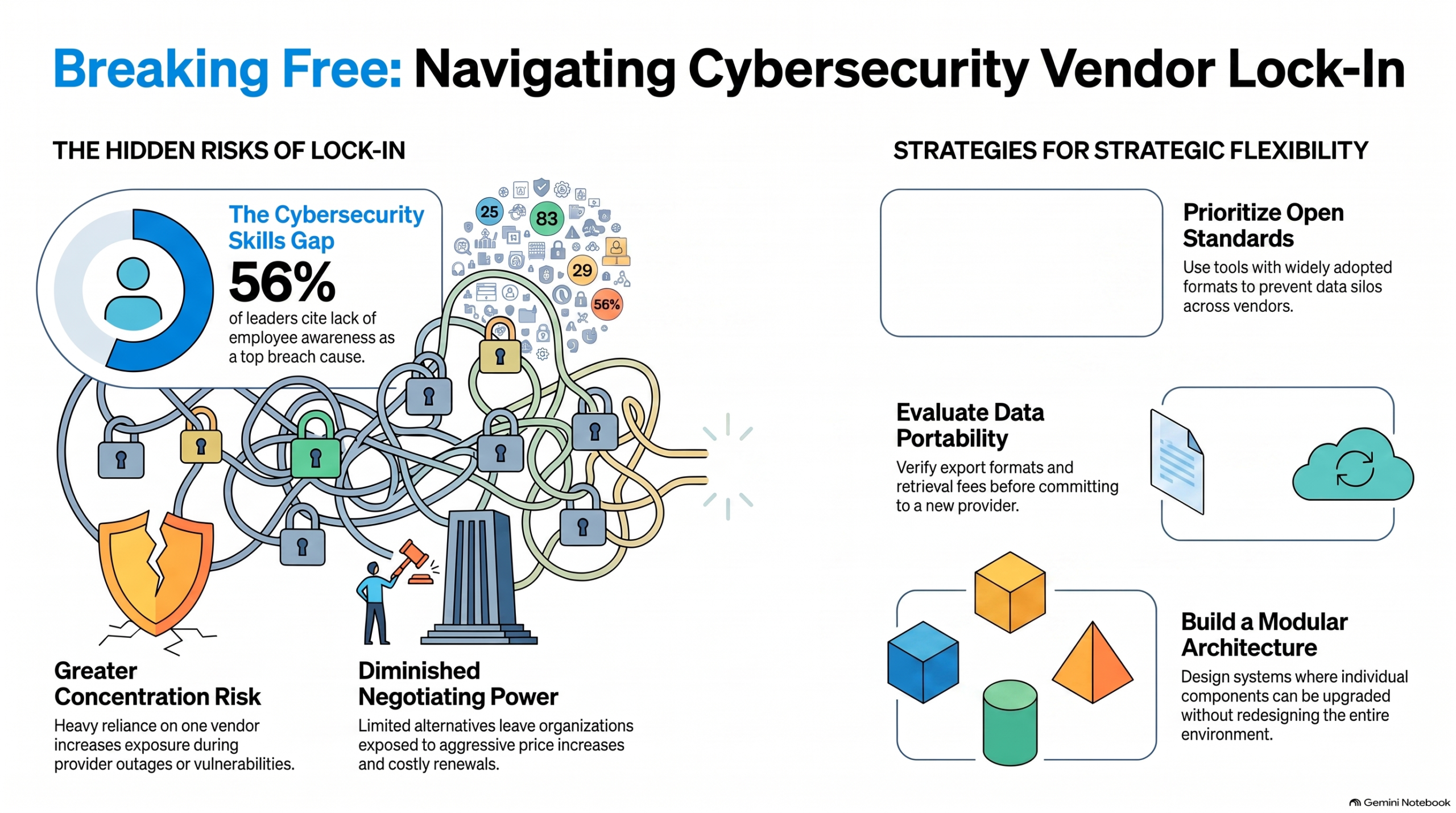
The problem can extend to workforce expertise as employees become highly familiar with one vendor’s tools without developing knowledge that transfers easily to other platforms. This skills gap carries broader security implications, especially since 56% of cybersecurity leaders cite a lack of employee security awareness as their top cause of breaches. Organizations can limit this form of dependence by developing transferable cybersecurity skills and training employees to work across different environments.
What Are the Risks of Cybersecurity Vendor Lock-In?
Cybersecurity vendor lock-in can affect far more than a company’s ability to change providers. Heavy reliance may increase costs and limit technology choices as business requirements change.
Risks include:
- Higher long-term costs: Limited alternatives can reduce an organization’s negotiating power, which leaves it more exposed to price increases and costly renewals.
- Fewer technology choices: Dependence on one ecosystem can make adopting newer or more effective cybersecurity solutions from competing providers more difficult.
- Greater concentration risk: Relying heavily on one vendor can increase exposure when that provider experiences an outage or vulnerability.
- Potential security gaps: A tightly integrated ecosystem may offer convenience but make weaknesses harder to identify or address with specialized third-party tools.
- Compliance challenges: Limited control over data storage and portability can make it harder for businesses to respond to changing regulatory requirements.
Strategies for Maintaining Cybersecurity Flexibility
Avoiding cybersecurity vendor lock-in starts with building flexibility into technology decisions from the beginning. Companies can preserve more control by considering interoperability, data portability and future migration needs before committing to any security provider.
- Prioritize Open Standards and Interoperability
Organizations juggle an average of 83 security solutions from 29 vendors, creating significant integration and management challenges. When these tools cannot communicate effectively, data silos can emerge while security teams face additional administrative work.
Choosing tools that support widely adopted standards and data formats can reduce these complications. Strong interoperability makes it easier to connect security products from different providers without becoming tied to one ecosystem. Before committing to a platform, businesses should also evaluate its third-party integrations to ensure it can adapt to future security needs.
- Evaluate Data Portability Before Buying
Companies should determine how easily they can export security logs and policies before selecting a vendor. Buyers should review supported export formats and identify any fees, technical limitations or restrictions that could complicate data retrieval.
Teams also need to understand what happens to stored data after a contract ends. Clear retention and retrieval policies can help organizations maintain control over critical security information while making future migrations easier.
- Avoid Unnecessary Dependence on One Ecosystem
Purchasing endpoint security, identity management and cloud protection from one provider can simplify integration and daily management. However, excessive consolidation can make future migrations more complex by tying multiple security functions to the same ecosystem.
A “universal remote” approach can help resolve this integration-versus-flexibility dilemma. Centralized, vendor-neutral management allows teams to connect and control tools from different providers without sacrificing the ability to replace individual components. Businesses should seek the benefits of platform integration while maintaining enough flexibility to swap out tools.
- Review Contracts With an Exit Strategy in Mind
Companies should examine renewal terms and migration fees before entering a long-term agreement. Contractual provisions that impose high exit costs or restrict data access can make switching providers unnecessarily expensive and difficult.
Negotiating these details early can preserve more flexibility later. Organizations can request clear data-export requirements and reasonable termination terms to reduce potential barriers if they eventually choose another cybersecurity provider.
- Build a Modular Cybersecurity Architecture
A modular security architecture allows businesses to replace or upgrade individual tools without redesigning the entire security environment. In contrast, a single monolithic platform can hide security gaps when teams need to rotate secrets quickly or introduce new telemetry.
These limitations may become more apparent as infrastructure and security requirements change. Standardized integrations can reduce dependencies between products while helping different tools work together. With greater modularity, security teams gain more freedom to adopt new technologies and adjust their defenses as emerging threats demand.
Building Cybersecurity Without Sacrificing Flexibility
Vendor relationships should strengthen cybersecurity without restricting an organization’s future options. Companies can look into open standards, data portability and clear contract terms to reduce cybersecurity vendor lock-in. By planning for portability from the beginning, businesses gain greater flexibility to respond to threats and business needs.

As the Features Editor at ReHack, Zac Amos writes about cybersecurity, artificial intelligence, and other tech topics. He is a frequent contributor to Brilliance Security Magazine.
Additional Resource
Video Explainer
Follow Brilliance Security Magazine on LinkedIn to ensure you receive alerts for the most up-to-date security and cybersecurity news and information. BSM is cited as one of Feedspot’s top 10 cybersecurity magazines.