

Individuals with fiduciary responsibilities are entrusted with access to confidential client information, financial records, investment portfolios and transaction authority. Because these privileged roles often control high-value assets and sensitive data, they have become prime targets for sophisticated cyber attacks. As digital threats continue to evolve, fiduciary cybersecurity has emerged as a critical component of enterprise risk management.
Why Fiduciary Accounts Are High-Value Targets
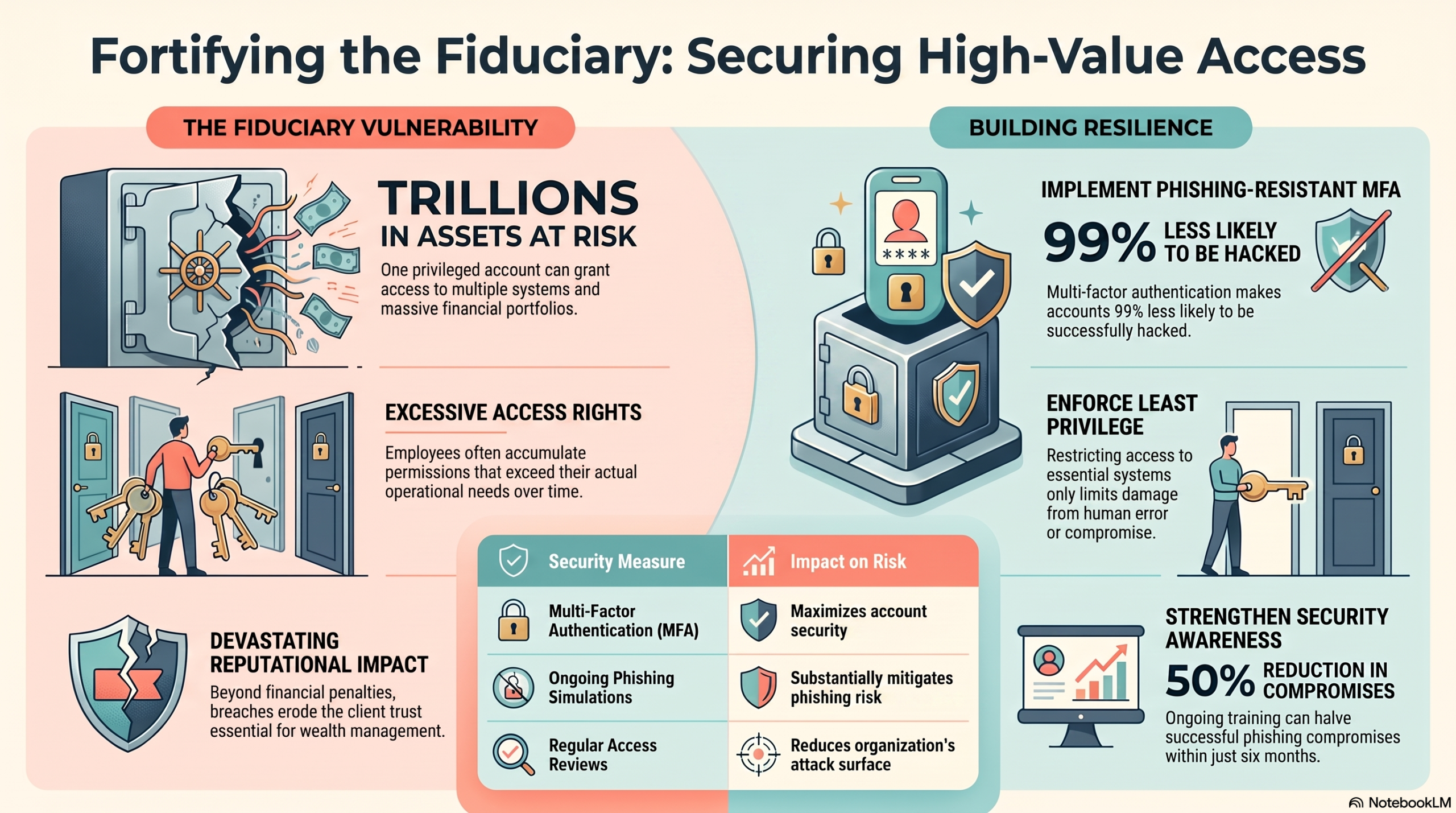
Cybercriminals prioritize accounts that provide maximum impact with minimal effort. Fiduciary-level credentials offer exactly that. Instead of attacking hundreds of individual users, cybercriminals can focus on a single privileged account that can access multiple systems or approve high-value transactions. There are tens of millions of plan participants and trillions in assets under fiduciary control, making these valuable accounts tempting targets for criminals.
Modern attacks can combine social engineering, credential theft, phishing campaigns and malware to gain unauthorized access. Additionally, business email compromise (BEC), account takeover and identity spoofing remain particularly effective for cybercriminals because fiduciary professionals regularly communicate with clients and financial institutions regarding sensitive transactions.
Key Vulnerabilities Associated with Fiduciary-Level Access
One significant vulnerability is excessive access. Over time, employees may accumulate permissions that exceed their operational needs. Without regular privilege reviews, outdated access rights can create opportunities for unauthorized activity if an account is compromised.
Weak authentication practices also remain a concern. Password reuse, predictable credentials or reliance on single-factor authentication make fiduciary accounts more susceptible to credential stuffing and phishing attacks.
Human error poses another challenge, as even experienced financial professionals can fall victim to carefully crafted phishing emails or fraudulent transaction requests that appear legitimate. Cybercriminals increasingly leverage publicly available information to personalize attacks, making them more convincing. Phishing and personal data breaches were among the most frequently reported cybercrimes in 2024.
Insider threats must also be considered. Whether intentional or accidental, employee misuse of privileged access can expose organizations to severe operational and financial consequences.
The Potential Business Impact
Unauthorized fund transfers, exposure of confidential client information and disruption of critical financial services can rapidly erode client trust. In industries governed by strict regulatory requirements, data breaches may trigger mandatory reporting obligations, compliance investigations and substantial financial penalties. Many corporations have become victims of data breaches that resulted in millions of dollars in compensation.
Most damaging is the long-term reputational impact. Wealth management firms and financial institutions depend on trust, so a single security incident involving fiduciary accounts can undermine years of client relationships.
Advanced Strategies for Strengthening Fiduciary Cybersecurity
Effective fiduciary cybersecurity requires a comprehensive, layered approach that addresses both technical vulnerabilities and human factors.
Implement Strong Multi-Factor Authentication (MFA)
Require MFA for all privileged accounts, as it makes an account 99% less likely to be hacked. Adopt phishing-resistant methods, such as hardware security keys or passwordless authentication.
Enforce the Principle of Least Privilege
Limit users’ access to only the systems and data required for their job responsibilities. Regular access reviews help remove unnecessary permissions that may accumulate over time, reducing the organization’s attack surface.
This approach is especially important because most successful cyberattacks exploit human behavior rather than technical flaws. Restricting privileges allows organizations to limit the damage caused by mistakes and prevent attackers from accessing additional systems.
Select Trusted Third-Party Trustees
Carefully evaluate the cybersecurity practices of third-party trustees and service providers before granting them access to sensitive systems or client data. Due diligence should include reviewing regulatory compliance, security certifications, incident response capabilities and access control policies.
Establishing clear contractual security requirements and conducting periodic vendor assessments can help reduce third-party risk and ensure external partners meet the highest fiduciary standards, adding another layer of protection.
Strengthen Security Awareness Training
Ongoing phishing simulations and training can reduce employee susceptibility, halving the rate of successful compromises within six months. Organizations should focus on educating fiduciary personnel about phishing, BEC and secure handling of sensitive financial information through ongoing training and simulated attacks.
Encourage Collaboration Between Security Teams and Fiduciary Stakeholders
Security professionals possess the technical expertise to identify threats, while fiduciary personnel understand the operational workflows surrounding sensitive transactions. Together, they can establish verification procedures, incident response protocols and risk management strategies that balance security with business efficiency.
Building a Resilient Fiduciary Cybersecurity Strategy
As cyber threats continue to target organizations with valuable financial assets, protecting privileged fiduciary accounts has become a strategic necessity. Effective fiduciary cybersecurity requires layered authentication, strict privilege management and security awareness training. By proactively securing these high-value access points, organizations can reduce cyber risk, protect client trust and strengthen resilience against increasingly sophisticated attacks.

Devin Partida is a frequent contributor to Brilliance Security Magazine, an industrial tech writer, and the Editor-in-Chief of ReHack.com, a digital magazine for all things technology, big data, cryptocurrency, and more. To read more from Devin, please check out the site.
Additional Resource
Video Overview
Follow Brilliance Security Magazine on LinkedIn to ensure you receive alerts for the most up-to-date security and cybersecurity news and information. BSM is listed among Feedspot’s top 10 cybersecurity magazines.