
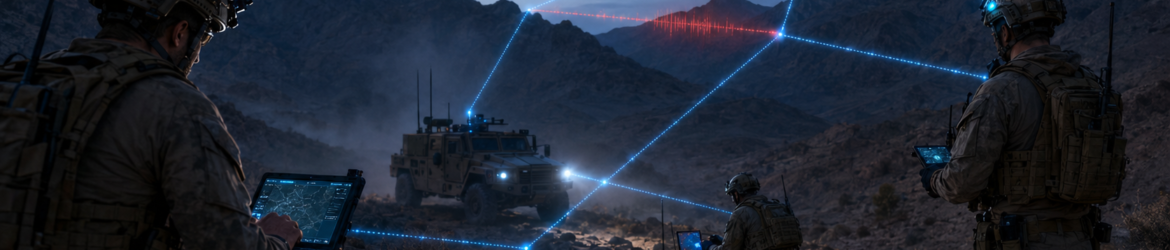
Communication is critical to mission outcomes in challenging settings. Whether in military, law enforcement or unmanned operations, secure, resilient systems ensure situational awareness and informed decision-making. As these environments become more connected and data-driven, communication systems must protect data and remain operational in unpredictable conditions.
Implementing Tactical Communication Strategies for Military Operations
Modern battlefields present significant communication challenges. Signal interception, jamming and operating in areas with no fixed infrastructure can compromise mission success. The core strategy for securing communication in high-pressure situations involves creating robust, resilient networks that can adapt to changing conditions and maintain connectivity even when individual nodes fail.
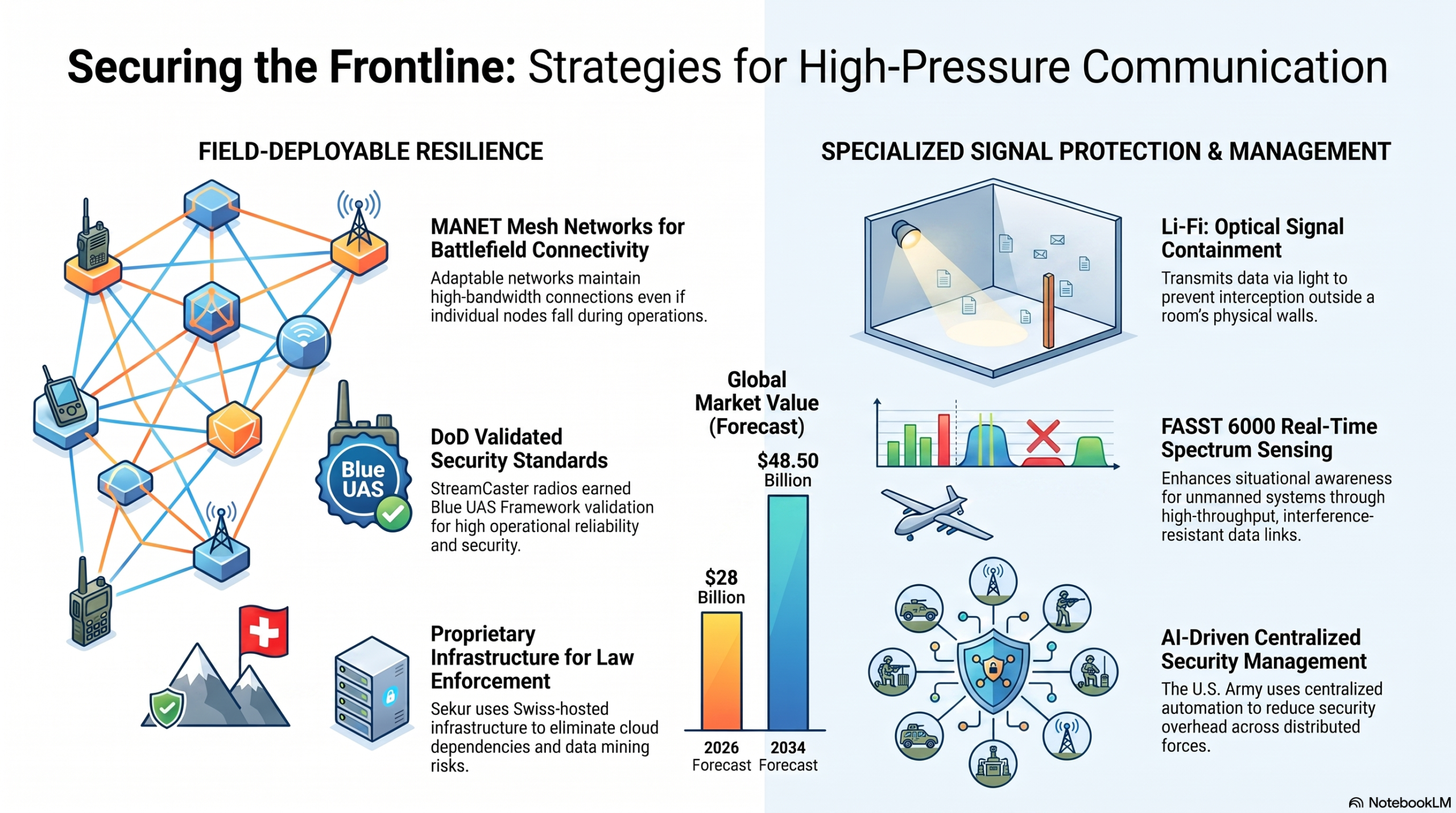
Market data reflects this rising demand. The global tactical communication market will grow from $28 billion in 2026 to $48.50 billion by 2034, emphasizing the importance of reliable communication systems in modern military operations.
The StreamCaster Mobile Ad-hoc Network (MANET) radios by Silvus Technologies address battlefield needs by establishing adaptable networks that maintain connectivity as forces move. Using proprietary Mobile Networked Multiple-Input, Multiple-Output (MN-MIMO) waveforms, they deliver high-bandwidth, long-range and secure communication effectively. Trusted by official agencies, the company’s StreamCaster MANET radios earned validation through the Department of Defense (DoD) Blue UAS Framework, confirming high security standards and operational reliability for military operations.
Securing Communications for Law Enforcement
Law enforcement agencies face unique communication requirements where evidence must remain admissible in court and sensitive information demands seamless coordination. Balancing security with usability while meeting legal standards becomes the core challenge.
Sekur, for example, provides Swiss-hosted secure communications that route all encrypted traffic through proprietary Swiss infrastructure, eliminating external cloud dependencies and data mining. Its invite-only platform, SekurMessenger, removes reliance on phone numbers while enabling agencies to handle controlled unclassified information within a secure environment. Messages and attachments self-destruct on command to protect case information and operational plans from unauthorized access.
When existing infrastructure fails or is compromised, mesh network technology can provide an additional layer of security. StreamCaster MANET radios enable the rapid deployment of a private, secure tactical network that unifies all operational assets independently. From complex urban environments to rural jurisdictions, the system’s flexibility proves particularly valuable when major incidents overwhelm traditional radio systems or cellular networks.
Ensuring Connectivity for Unmanned Systems
Unmanned systems like drones and ground robots require secure, high-throughput data links to transmit video and sensor data. Maintaining connections that resist interference and hijacking remains the primary challenge.
StreamCaster radios provide the high-bandwidth, long-range and secure links necessary to operate drones and other unmanned assets safely in complex environments. Operators can further integrate StreamCaster MANET with the Filtering by Aliasing Spectrum Sensing Technology (FASST) 6000 sensor to enhance real-time situational awareness.
While the device is compact and lightweight, FASST 6000 delivers capabilities typically found in much larger systems. Operators can deploy it as a rugged handheld unit or integrate it as an original equipment manufacturer module into unmanned systems, allowing them to reprogram scan parameters on the fly.
Protecting Information in Highly Sensitive Environments
In certain settings, radio-frequency signals can be liabilities, particularly in secure government facilities and tactical operations centers that must prevent electronic eavesdropping. Technology that transmits data using light offers a secure alternative.
Using visible or infrared light to transmit information, the Oledcomm light fidelity system physically confines the network to a room, where optical signals cannot penetrate walls. As a result, it’s impossible to intercept communications from outside the protected perimeter, creating an inherently safe channel for the exchange of classified information. This line-of-sight or localized containment makes it highly effective in military, government and corporate settings that handle classified or sensitive information at scale.
Overcoming System-Wide Challenges
Individual tactical solutions address immediate operational needs, but larger systemic issues continue to challenge the defense communication ecosystem.
For example, managing immense amounts of data and security protocols across vast, distributed forces creates significant overhead. The U.S. Army addresses this challenge through the Communications Security Operations Center, which centralizes and automates security management, reducing the burden on individual units. The use of artificial intelligence also helps to maintain secure communication across the entire force.
As security requirements change, organizations implementing communication systems must prioritize both immediate tactical capabilities and long-term interoperability and scalability. Solutions that work in isolation today may create integration challenges tomorrow, particularly as operations increasingly require coordination across multiple agencies and international partners.
Preparing for the Future of Secure Communications
Secure communication in high-pressure situations continues to evolve rapidly. Across military, law enforcement and unmanned operations sectors, organizations are adopting sophisticated approaches that prioritize resilience, adaptability and physical security. As AI and technology change operational dynamics, maintaining seamless connectivity amidst challenges is paramount. These innovations will set the stage for future mission success, where secure connections remain essential.

As the Features Editor at ReHack, Zac Amos writes about cybersecurity, artificial intelligence, and other tech topics. He is a frequent contributor to Brilliance Security Magazine.
Additional Resources
Video Overview
Follow Brilliance Security Magazine on LinkedIn to ensure you receive alerts for the most up-to-date security and cybersecurity news and information. BSM is cited as one of Feedspot’s top 10 cybersecurity magazines.