
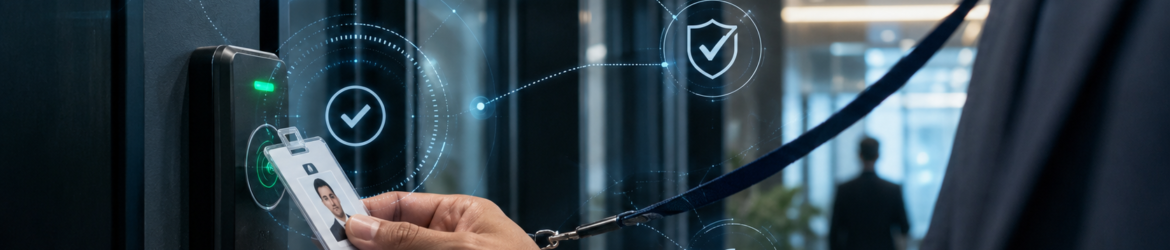
If someone imagines cybersecurity at work, they are more likely to envision an analyst at their desk, using code to ward off threats. However, this is only half of the defensive puzzle. While experts use many digital tools and their brains to build protective walls, physical security remains important. Bridging these priorities is vital for a robust security posture, making the monitoring of every door and camera equally crucial as firewalls and software. Zero-trust architecture is the foundation for both.
The Importance of Unifying Cyber and Physical Security
Cyberattacks should be viewed as an inevitability. They have disrupted essential services from hospitals to banks and uprooted small businesses. Many organizations endure these consequences because the weight of their physical and digital infrastructure is uneven.
When people think of zero trust, they imagine digital authentication, but it is also critical for physical fixtures. When entering a business, a badge scan should be necessary, promoting the “never trust, always verify” mentality that is the pillar of zero trust. This is as vital as requiring multiple checks to log into a corporate computer.
Every device and place in a company used to assume that once someone was inside, they were trustworthy. Now, the defensive measures need to extend throughout a corporation’s interior and perimeter to keep up with the severity of modern threat actors and their advanced tactics.
Ways Zero Trust Secures the Converged World
These are the techniques experts use to balance the attention given to digital and physical infrastructure, using zero trust as a framework.
Compiling One Person’s Digital Key
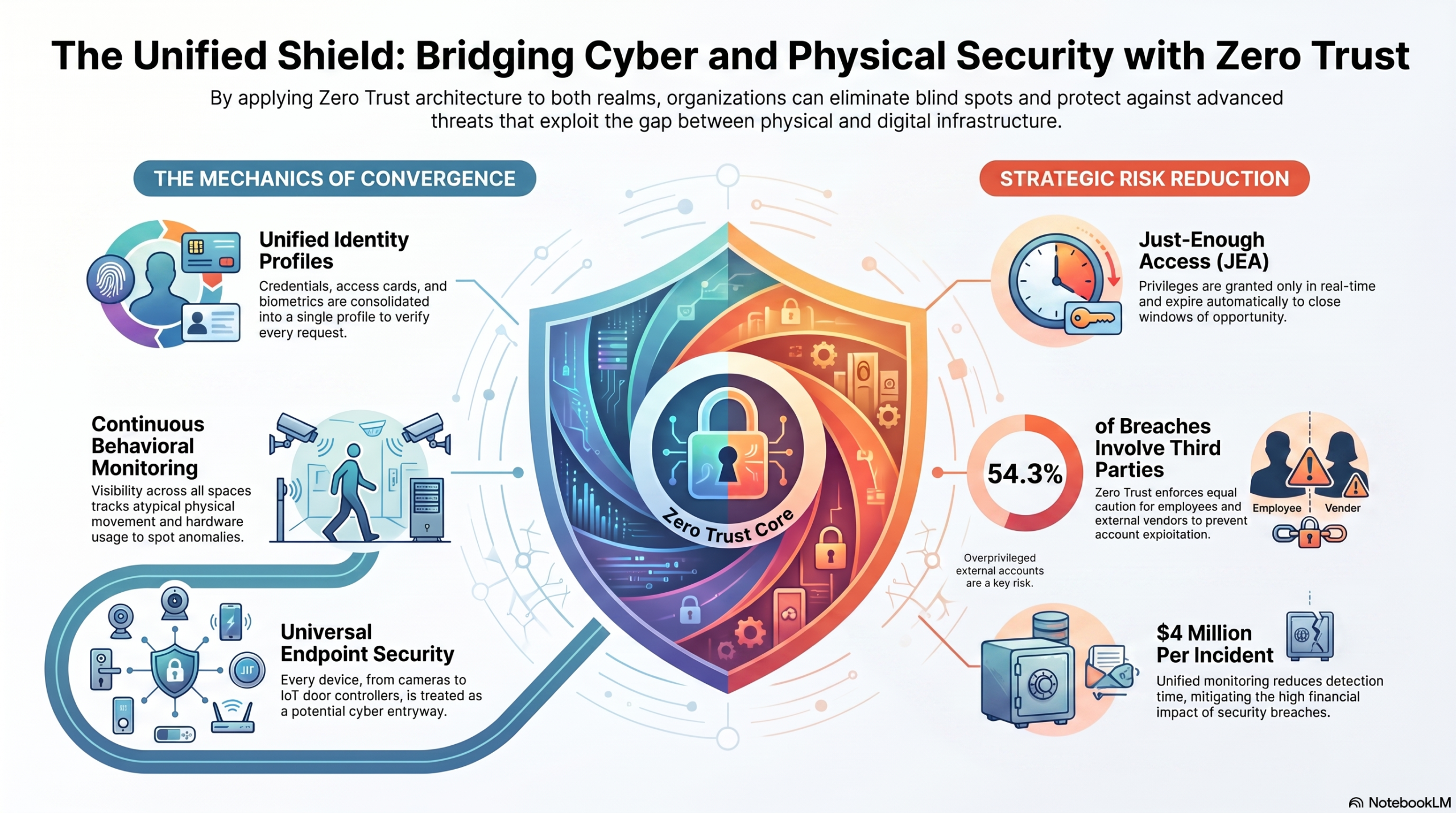
Zero trust consolidates a person’s profile into a single identifiable resource. Credentials are attached to access cards, which are associated with biometric data. These resources cross-reference each other to create adequate checks and balances for each access request.
This security prevents circumstances like insider threats, where their suspicious physical behaviors may be undetectable against their pristine digital presence. The visibility over both keeps entities more attuned to all activity. It could also detect an access attempt from a different IP address if an employee is already in the office, which could signify stolen credentials.
Monitoring Continuously to Spot Anomalies
Incident frequency has risen in recent years and could cost $4 million dollars each time one occurs. Therefore, visibility across all spaces is the most effective defense against even the slightest behavioral changes. Every diversion and anomaly needs to be recorded, and this includes atypical physical movement throughout a building or the usage of specific hardware. Zero-trust monitoring principles could reduce the time it takes to identify an attack.
Securing Every Device Endpoint
One of the biggest struggles teams have when converging physical and digital security with zero trust is compatibility. When they start making process shifts to accommodate security in each front while abiding by these principles, they can consider integration-ready devices, including door controllers, cameras and software. Every fixture must be usable with zero-trust values, or it should not be an option for infrastructure.
If staff assume every endpoint is a potential vertical for cyberattackers to use, they understand the impact of all devices in a converged environment. Everything is an entryway, from operational technologies to the Internet of Things.
Just-Enough Access to Close Essential Doors
The only people who have access to business-critical resources are those who need them in real time. Providing privileges to individuals on a standing basis is an antiquated approach that leaves the door open to attack variants such as social engineering. A just-in-time access approach also limits the window for individuals to be within a system, whether it be physical doors or servers. Eventually, allowances expire.
This includes third-party access, especially when 54.3% of breaches are attributable to overprivileged external accounts. When it comes to physical security, zero-trust principles mean equal caution for an employee as for a food delivery driver.
The Inescapability of Convergence
The world of cybersecurity has prioritized digital methods in recent years, while physical security has been dismissed. In reality, zero trust is the bridge between the realms, protecting perimeter and interior assets in physical and digital forms. If experts translate zero trust across all infrastructure, it will provide a more comprehensive security blanket over people, brands, buildings, computers and data.

As the Features Editor at ReHack, Zac Amos writes about cybersecurity, artificial intelligence, and other tech topics. He is a frequent contributor to Brilliance Security Magazine.
Additional Resource
Video Overview
Follow Brilliance Security Magazine on LinkedIn to ensure you receive alerts for the most up-to-date security and cybersecurity news and information. BSM is cited as one of Feedspot’s top 10 cybersecurity magazines.