

Mergers and acquisitions (M&A) are complex business transactions that involve combining companies, assets and operations. The financial, legal and operational aspects of these transactions often take center stage, but cybersecurity has become an equally vital factor in ensuring a successful deal.
Organizations are becoming more digitally interconnected, so overlooking cybersecurity risks during M&A can lead to costly consequences, like data breaches, regulatory penalties and reputational damage.
The Importance of Cybersecurity in M&A
In 2023, the Federal Bureau of Investigation reported losses of over $12.5 billion from over 880,000 cybercrime complaints, highlighting the growing financial impact of cyber threats. Given this landscape, cybersecurity’s role must be considered throughout the entire M&A life cycle. During a transaction, organizations combine systems, networks and data, which expands the potential attack surface and creates opportunities for cyber threats.
Failure to properly assess cybersecurity risks can have serious consequences. For example, undisclosed data breaches or weak security controls can cause lawsuits, intellectual property loss, brand devaluation and even prevent the deal from going through.
Key Cybersecurity Considerations During M&A
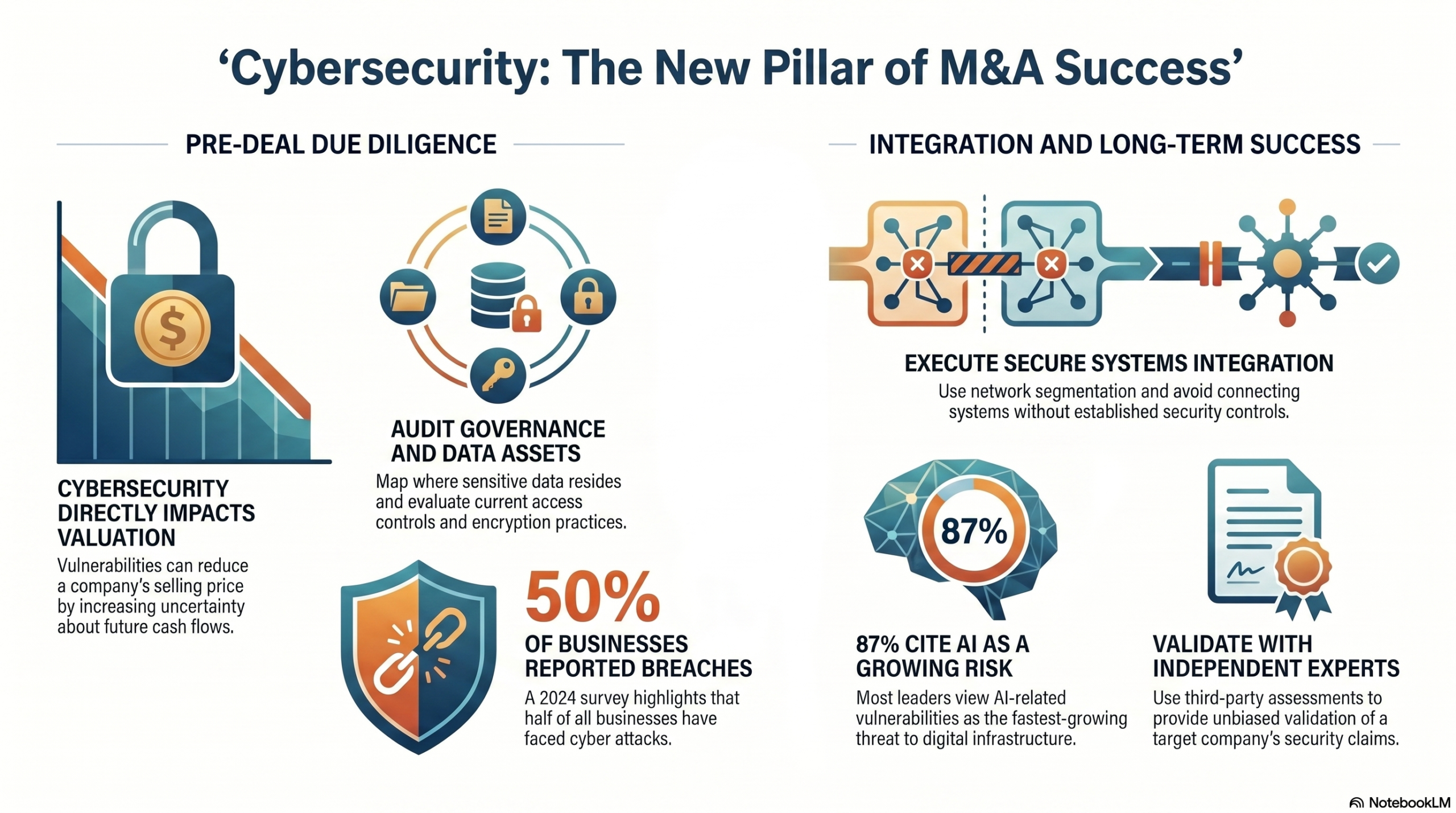
According to the 2024 UK Department for Science, Innovation and Technology survey, around 50% of businesses experienced a cybersecurity breach or attack. Avoiding the risks and understanding the key considerations involved in M&A is essential for both business buyers and sellers.
Conducting Cybersecurity Due Diligence
Due diligence involves evaluating the target company’s security to identify potential risks and vulnerabilities. Management and IT teams have to examine the target company’s cybersecurity posture. This includes its policies, technologies and past cybersecurity incidents. This assessment helps uncover hidden risks that could affect the deal’s value or feasibility.
There are company valuation methods, such as discounted cash flow, that incorporate risk into the valuation, meaning cybersecurity vulnerabilities can directly reduce a company’s selling price by increasing uncertainty about future cash flows.
Due diligence must be done early in the process to allow organizations to identify deal-breaking risks, negotiate better terms or plan mitigation strategies before finalizing the transaction.
Identifying Sensitive Data and Assets
Several areas should be carefully examined during this stage. Security governance and policies must be reviewed to determine whether clear frameworks and cybersecurity procedures are in place.
Companies often store large volumes of sensitive information, including customer data, intellectual property and financial records. During an acquisition, it is important to identify where this data resides and how it is protected.
IT teams need to map critical data assets and determine how data is stored, processed and transmitted. They will also have to evaluate access controls and encryption practices. A thorough understanding of data flows ensures that sensitive information remains protected during and after the transition.
Evaluating Third-Party Risks
Many organizations rely on third-party vendors and service providers for various business functions. These external partners can introduce additional cybersecurity risks, so managers and IT teams should carefully review vendor contracts and security requirements and assess third parties’ cybersecurity practices.
Managers could also take practical steps to mitigate third-party cybersecurity risks, such as getting to know service providers.
Assessing Incident Response Capabilities
In today’s digital environment, an organization can’t be completely immune to cyber threats, making it important to evaluate how well the target company can detect, respond to and recover from cybersecurity incidents. This consideration is financially relevant, as many corporations have already had to pay millions of dollars in compensation following data breaches.
Organizational decision-makers should determine whether the target company has an established incident response plan, assess how quickly it can detect and contain threats, and see if employees are trained to recognize and report incidents. Strong incident response capabilities can significantly reduce the impact of cyberattacks and help maintain business continuity.
Planning for Secure Integration
When the deal is done, the acquiring company must integrate systems, networks and processes, which presents significant cybersecurity challenges. This transition period offers attackers opportunities to more easily infiltrate and overcome defenses.
Cybersecurity teams should develop a secure integration plan that outlines how systems will be combined without introducing vulnerabilities. It is important to avoid connecting systems without proper security controls and to implement network segmentation when necessary.
Ensuring Regulatory Compliance
There are specific data protection and cybersecurity regulations for different industries and regions, with noncompliance resulting in fines and legal complications. Management must identify applicable regulations and ensure that both companies comply with them.
They must also address any gaps before finalizing the transaction. Maintaining compliance avoids penalties and strengthens trust with customers and stakeholders.
Best Practices for Cybersecurity in M&A
To effectively manage cybersecurity risks during M&A, organizations should adopt a proactive approach. They must develop and follow a clear strategy to ensure secure integration.
It is important to involve cybersecurity experts from the outset and to gather detailed information about the target company’s security posture. Organizations should also validate findings by requesting evidence to support cybersecurity claims and consider using independent experts to provide unbiased assessments.
Additionally, the IT and cybersecurity team should continually upskill and learn about new threats. For example, in a Global Cybersecurity Outlook survey, 87% of respondents cited AI-related vulnerabilities as the fastest-growing cyber risk. Cybersecurity should not be treated as a one-time effort but as an ongoing process that includes continuous monitoring and improvement.
Cybersecurity Is the New Pillar of M&A Success
Cybersecurity has become a fundamental component of M&A. As digital threats continue to evolve, organizations must evolve with them. They must recognize that cybersecurity risks can significantly impact deal value, operational stability and long-term success.
Through meticulous due diligence and active involvement of management and IT teams, companies can identify potential risks and implement effective mitigation strategies. Prioritizing cybersecurity protects assets and data, strengthens trust, and supports sustainable growth in an increasingly digital business environment.

As the Features Editor at ReHack, Zac Amos writes about cybersecurity, artificial intelligence, and other tech topics. He is a frequent contributor to Brilliance Security Magazine.
Additional Resource
Video Overview
Follow Brilliance Security Magazine on LinkedIn to ensure you receive alerts for the most up-to-date security and cybersecurity news and information. BSM is cited as one of Feedspot’s top 10 cybersecurity magazines.