

A hostile executive departure presents a fundamentally different risk profile than a typical employee exit. Senior leaders hold extensive system privileges and influence strategic decisions, giving them access to assets that can affect the entire organization.
A poorly managed executive departure or hostile termination can create widespread cybersecurity exposure. Organizations that establish an executive-specific offboarding strategy position themselves to better maintain business continuity.
Why Executive Departures Create High-Impact Insider Threats
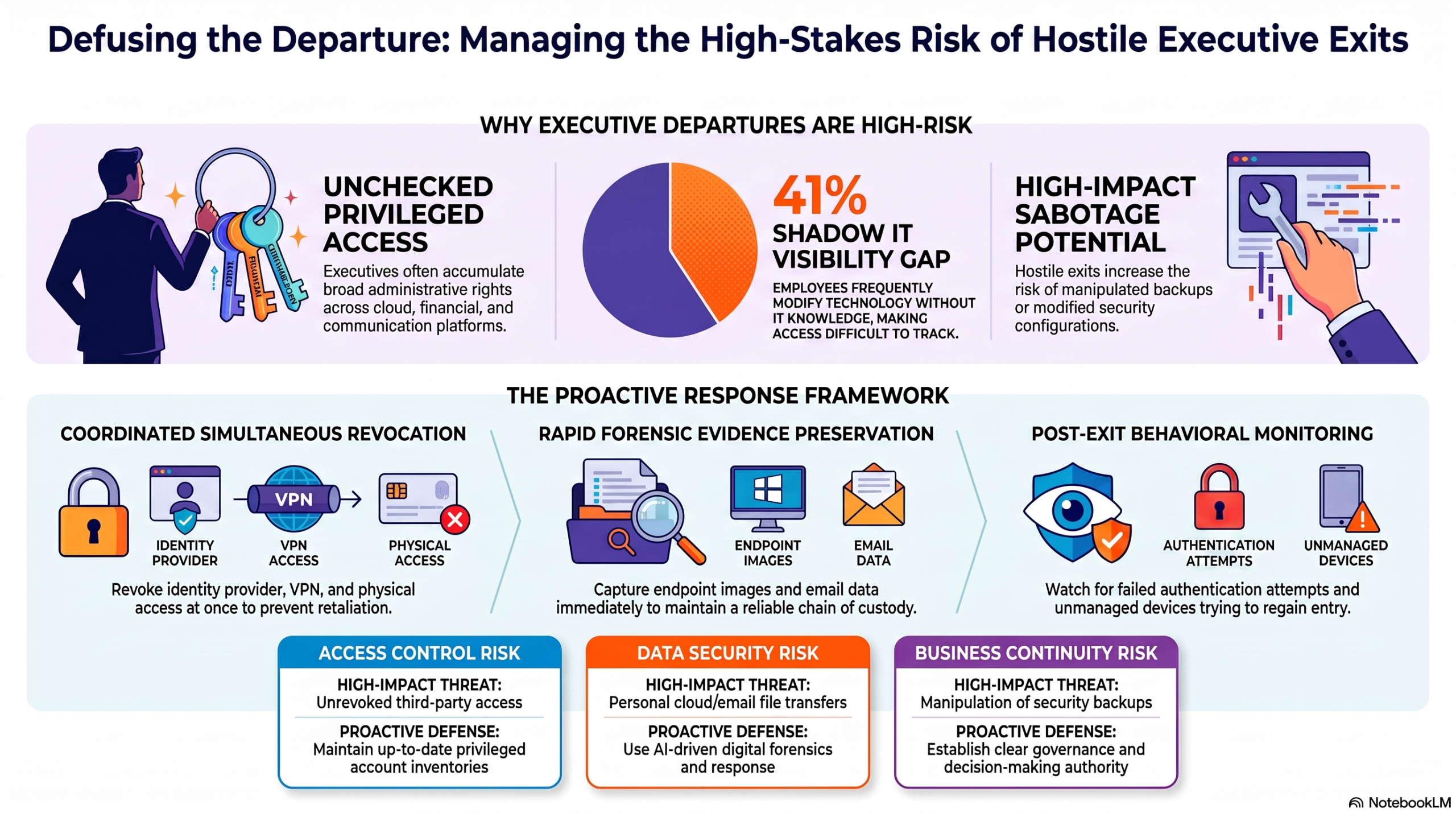
Senior executives often accumulate broad administrative rights as their responsibilities grow. They may have privileged access to cloud platforms, financial systems and communication tools. Over time, these permissions can be difficult to track without continuous identity governance and regular access reviews.
Limited visibility makes the problem even more difficult to manage, as 41% of employees acquired, modified or created technology without their IT or security team’s knowledge in 2022. Even after access has been revoked, executives retain valuable knowledge of strategic initiatives, while disputed terminations can strengthen motivations for malicious activity.
Critical Risks Organizations Must Anticipate
Executives may transfer sensitive files through personal cloud storage or personal email forwarding, complicating detection and recovery. The risk is significant, especially given that over 3,000 data breach incidents were recorded in the U.S. in 2023, highlighting the need to protect valuable business information from insider threats.
A hostile termination can also increase the likelihood of deliberate disruption. Privileged users may modify security configurations or manipulate backups to interfere with business operations and delay recovery efforts. Confidential information may also be shared with competitors or investors, which can lead to financial losses and potential legal consequences.
Building a Proactive Executive Departure Response Framework
Organizations should maintain inventories of privileged accounts, critical assets and third-party access, rather than identifying them only during an executive exit. Up-to-date records allow security teams to revoke access quickly and reduce the chance of overlooked systems or privileged accounts. Regular reviews also help organizations keep pace with changing responsibilities and business relationships.
Organizations should establish clear governance documents, including operating agreements, that define decision-making authority in the event an executive is unexpectedly unable to fulfill their responsibilities. Security, HR, legal and executive leadership should also synchronize their planning so that access removal and legal actions occur simultaneously. This step can reduce confusion and limit opportunities for insider misuse.
Immediate Actions After a Hostile Termination
The first few hours after a hostile executive departure can determine whether an organization successfully contains insider risk or faces prolonged disruption. A coordinated response helps protect critical systems and reduce the likelihood of unauthorized access or malicious activity.
Revoke Privileged Access Simultaneously
Organizations should revoke identity provider access, VPN credentials and physical building access through a coordinated process rather than as separate tasks. This approach ensures that no active access points remain available after a hostile termination.
Simultaneous access revocation minimizes opportunities for retaliation by preventing former executives from reconnecting to corporate systems or facilities while offboarding activities are still underway. It also reduces the risk of unauthorized access during the critical transition period, when overlooked accounts or delayed actions can expose sensitive systems and business data.
Preserve Evidence Through Forensic Collection
Organizations should collect endpoint images and email data before retention periods expire. Preserving this information early reduces the risk of losing critical evidence and provides investigators with a complete record of user activity. Artificial intelligence (AI)-driven digital forensics and incident response also accelerate the remediation of cyberthreats while ensuring that any related digital evidence remains uncompromised.
Proper forensic preservation supports internal investigations by helping security teams reconstruct events and identify unauthorized actions. Preserved evidence also helps organizations meet litigation and regulatory obligations by maintaining a reliable chain of custody for critical digital records.
Increase Post-Departure Monitoring
Organizations should continue monitoring their environment after a hostile termination instead of assuming the risk ends once access has been revoked. Security teams should watch for failed authentication attempts and access from unmanaged devices, as these activities may indicate ongoing efforts to regain entry or misuse existing credentials.
Behavioral analytics and threat detection tools provide an additional layer of protection during this period. They can identify suspicious user behavior and other indicators of delayed retaliation or compromised credentials. Early detection allows security teams to contain potential threats and reduce the impact of insider activity.
Reducing Insider Risk During Executive Transitions
A hostile executive departure remains a high-risk insider threat scenario because senior leaders possess privileged access and strategic knowledge. Organizations can reduce their exposure during a hostile termination through coordinated planning and immediate access revocation. Security leaders should continually refine executive offboarding procedures before a high-risk departure occurs to protect company assets and maintain business continuity.

Devin Partida is a frequent contributor to Brilliance Security Magazine, an industrial tech writer, and the Editor-in-Chief of ReHack.com, a digital magazine for all things technology, big data, cryptocurrency, and more. To read more from Devin, please check out the site.
Additional Resource
Video Overview
Follow Brilliance Security Magazine on LinkedIn to ensure you receive alerts for the most up-to-date security and cybersecurity news and information. BSM is listed among Feedspot’s top 10 cybersecurity magazines.