

The Cybersecurity Maturity Model Certification (CMMC) ensures that companies in the defense supply chain have the appropriate level of cybersecurity to protect sensitive government information. Explore five of the most common challenges companies face on their path to compliance and effective tips to help overcome them.
Why CMMC Compliance Matters
CMMC is structured in different levels, from Level 1 (basic security) to Level 3 (advanced security). Each level has its own set of rules and practices that a company must follow. These rules cover who can access information, how the company responds to a cyberattack and how it assesses its own security.
Achieving CMMC certification is a requirement for companies that want to work with the DoW. The certification process verifies that a company can protect sensitive information in accordance with government standards. Beyond fulfilling contractual obligations, adopting the CMMC framework helps a business improve its own security posture against common cyber threats, reducing the risk of data breaches that could damage its operations and reputation.
5 Common CMMC Compliance Challenges and Tips to Overcome Them
Companies may face several common challenges when working toward CMMC compliance, including a lack of understanding of the rules, limited resources and technical issues. Overcoming these obstacles is key to getting certified and achieving stronger cybersecurity.
Lack of Understanding of the CMMC Framework
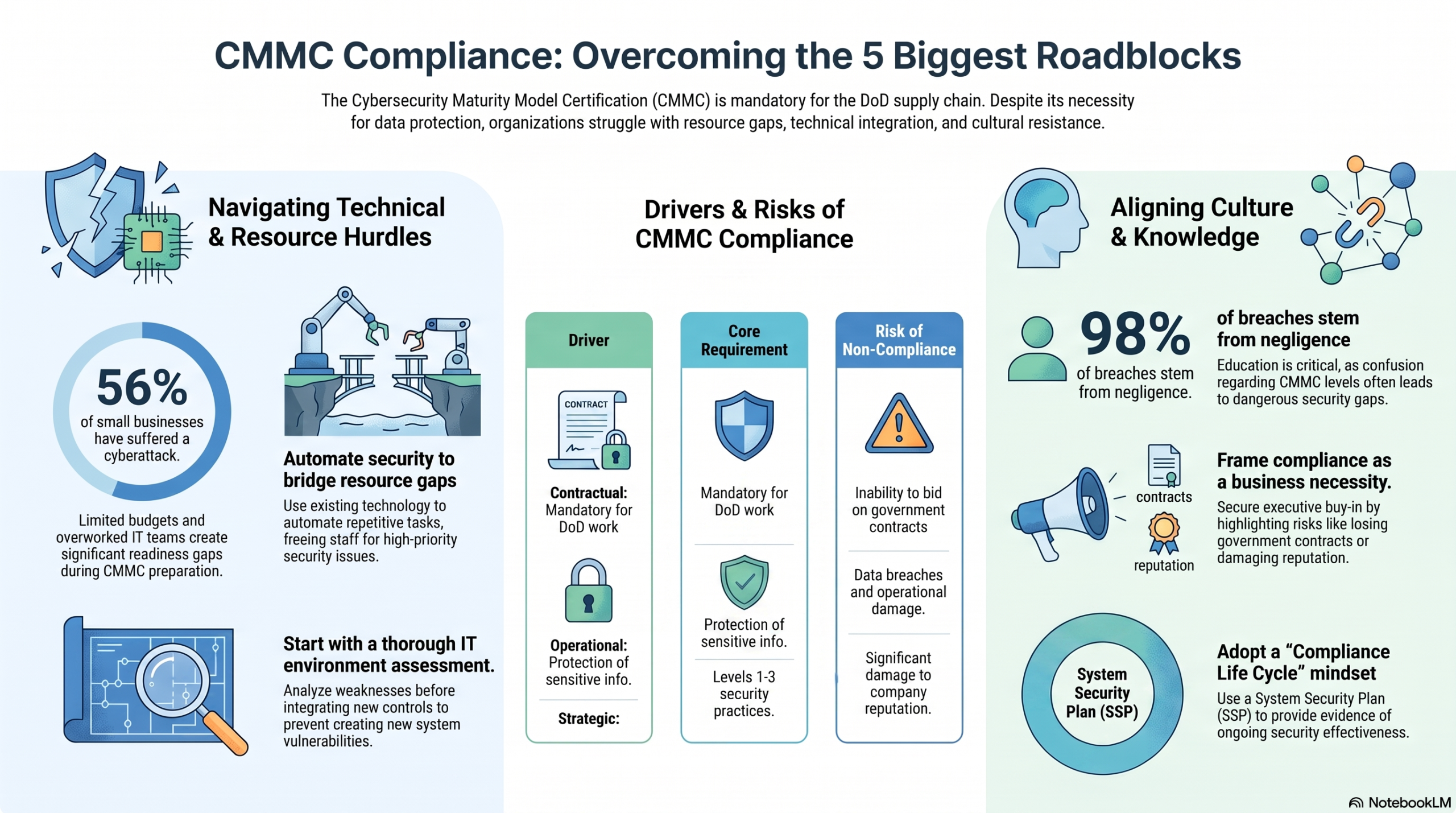
For many organizations, the first step is simply understanding what CMMC requires. The framework is detailed, and companies must determine which rules apply to their business and what they need to do at each level. Confusion often leads to gaps in a company’s security plan, leaving it unprepared for a CMMC assessment. A 2023 study found that 98% of security breaches were due to carelessness or negligence.
Organizations should focus on education by creating comprehensive training programs for staff. When employees understand the reasoning behind the rules, they are better equipped to help the company achieve and maintain CMMC compliance.
Resource Constraints
Robust cybersecurity costs money and requires skilled staff. Even though 56% of small businesses have suffered a cyberattack, many of these companies struggle to allocate enough budget to security. The responsibility for IT and cybersecurity frequently falls to a single person or a small team that is already overworked. This creates a significant readiness gap and leaves the company vulnerable.
A practical way to handle constraints is to wisely use the resources a company already has. Businesses can automate their security processes using their existing technology. Automation can handle repetitive tasks, freeing up staff to focus on more important issues. This cost-effective approach helps companies become more efficient and improve their security.
Complexities of Security Integration
A new set of security rules often needs to be integrated with a company’s existing technology and computer systems. New security measures must be integrated with the existing IT infrastructure to prevent new vulnerabilities.
Companies should start with a thorough assessment of their current IT environment. This assessment will help them understand their system’s weaknesses and areas that need improvement. From there, they can create a strategic plan to add the new security controls that align with company goals and support daily operations.
Challenges of Ongoing Maintenance
CMMC compliance is an ongoing process that requires constant attention. Cybersecurity threats are constantly evolving, so a company’s defenses must adapt accordingly.
Businesses must adopt a “compliance life cycle” mindset. This life cycle means continuously proving that their security controls are in place and working correctly. It includes keeping the System Security Plan (SSP) and other documents up to date. An SSP explains how a company meets each CMMC requirement. During an audit, this documentation serves as the evidence that security measures are effective and consistent.
Lack of Executive Buy-In
Full support from company leaders is essential for a successful CMMC compliance initiative. If executives don’t see the value in cybersecurity, they won’t provide the necessary budget or resources. The lack of resources can leave security teams under-resourced and create a company culture where security isn’t taken seriously.
To get executives on board, it’s important to frame CMMC compliance as a business necessity. The risks of noncompliance include losing the ability to bid on government contracts or suffering a data breach that damages the company’s reputation. When leaders understand that strong security is a core part of managing business risk, they are more likely to prioritize it.
A Path Forward to CMMC Success
By understanding the CMMC framework, using resources wisely, planning integrations carefully, treating compliance as an ongoing effort, and securing leadership support, any organization can build a clear roadmap to success. Achieving CMMC certification is an opportunity to build a stronger, more resilient company prepared for tomorrow’s cybersecurity challenges.

As the Features Editor at ReHack, Zac Amos writes about cybersecurity, artificial intelligence, and other tech topics. He is a frequent contributor to Brilliance Security Magazine.
Additional Resources
Video Overview
Infographic
Follow Brilliance Security Magazine on LinkedIn to ensure you receive alerts for the most up-to-date security and cybersecurity news and information. BSM is cited as one of Feedspot’s top 10 cybersecurity magazines.