

Physical security has long relied on video systems that record events for later review. In the past, organizations would wait for something to happen and then rely on recorded footage to understand what went wrong. This model worked when environments were smaller and risks were easier to identify.
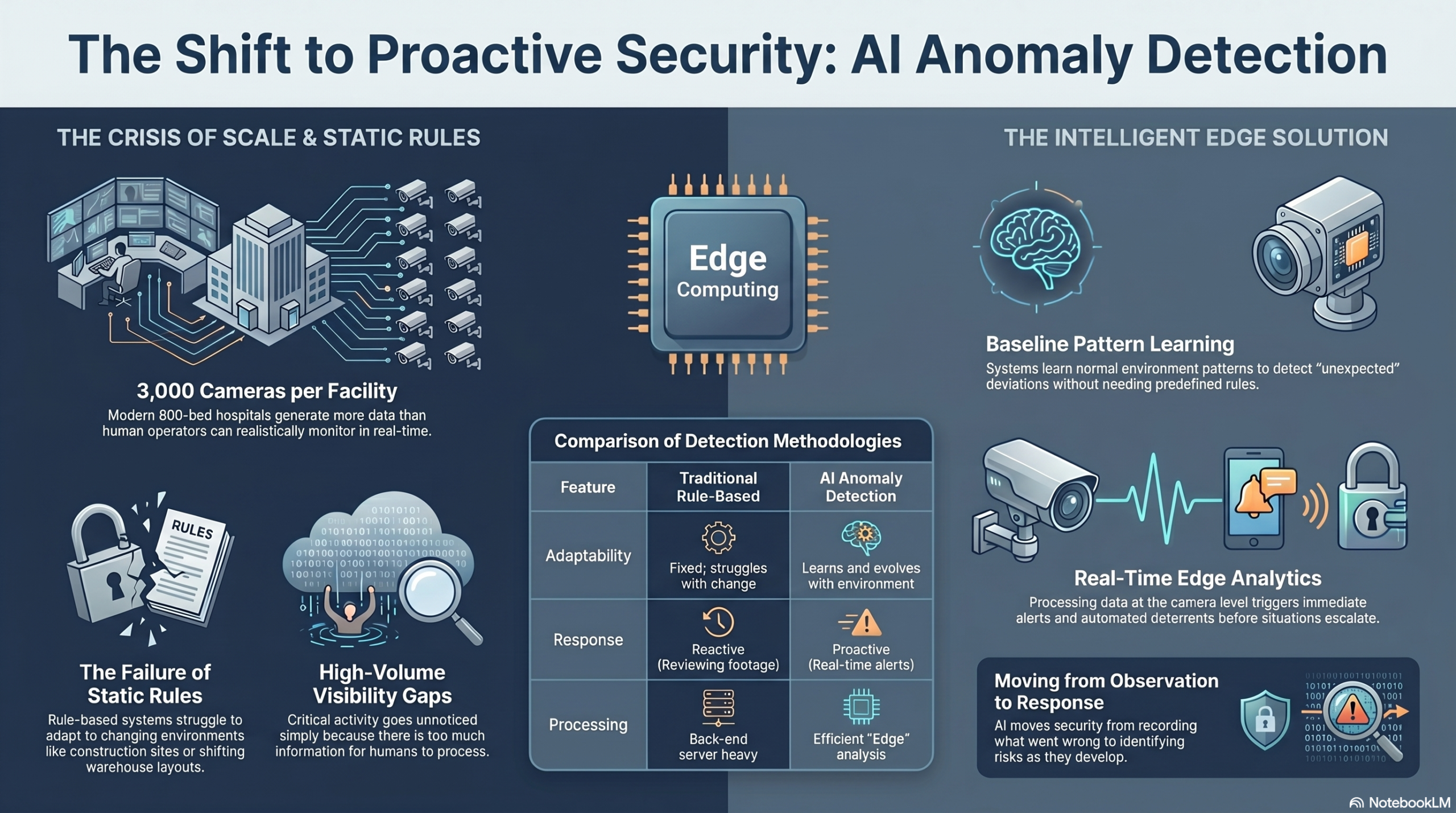
But today’s environments are far larger and more complex. Security teams now oversee distributed networks of facilities and campuses with large facilities that generate thousands of simultaneous video streams. An 800-bed hospital, for example, may operate 2,000 to 3,000 cameras monitoring entrances, corridors, and critical areas, creating more data than human operators can realistically monitor in real time.
As organizations expand their operations, these limitations become more pronounced. Important activity can go unnoticed simply because there is too much information to process. Video systems may be observing everything yet still struggle to surface the moments that matter most.
Bringing Intelligence Closer to the Environment
Edge analytics reduces processing load required on back-end servers by moving analysis closer to the point of capture. Movement in restricted zones, activity outside operating hours, or shifts in crowd patterns can trigger immediate alerts. Operators no longer need to watch every feed. The system flags what requires attention.
The impact is already visible in complex environments such as airports, logistics hubs, and critical infrastructure. Video security systems now analyze behavior continuously to identify patterns that fall outside expected conditions, such as unauthorized access, unusual crowd movement, or activity that does not match the environment.
These detections can trigger immediate responses, including alerts to operators or automated deterrents such as lighting or audio warnings. This reduces the need for constant monitoring and gives teams more time to respond before situations escalate.
That time saved directly changes outcomes.
Closing Visibility Gaps in Complex Environments
Many secured environments do not remain static. Construction sites change weekly. Warehouse layouts shift with inventory flow. Transportation hubs experience constant variation throughout the day.
Rule-based systems struggle in these conditions. Static thresholds do not adapt as the environment changes, and new risks can go undetected. Performance also depends on the environment. Camera placement, network conditions, system configuration, and customer-defined security policies all affect how detection works in practice.
Anomaly detection takes a different approach. Systems learn baseline patterns over time and identify deviations from those patterns. This allows teams to detect issues that were not predefined in a rule set.
This model is already standard in cybersecurity, where systems monitor network behavior to identify anomalies before an attack is confirmed. Applying the same approach to physical environments improves detection across both security and operational risk.
From Passive Monitoring to Real Time Awareness
Adding more cameras does not solve the problem. Understanding what those cameras capture does.
As edge AI systems mature, anomaly detection will continue to improve in accuracy and context. These systems will integrate with robotics, autonomous patrol units, and connected infrastructure to extend coverage and reduce manual oversight.
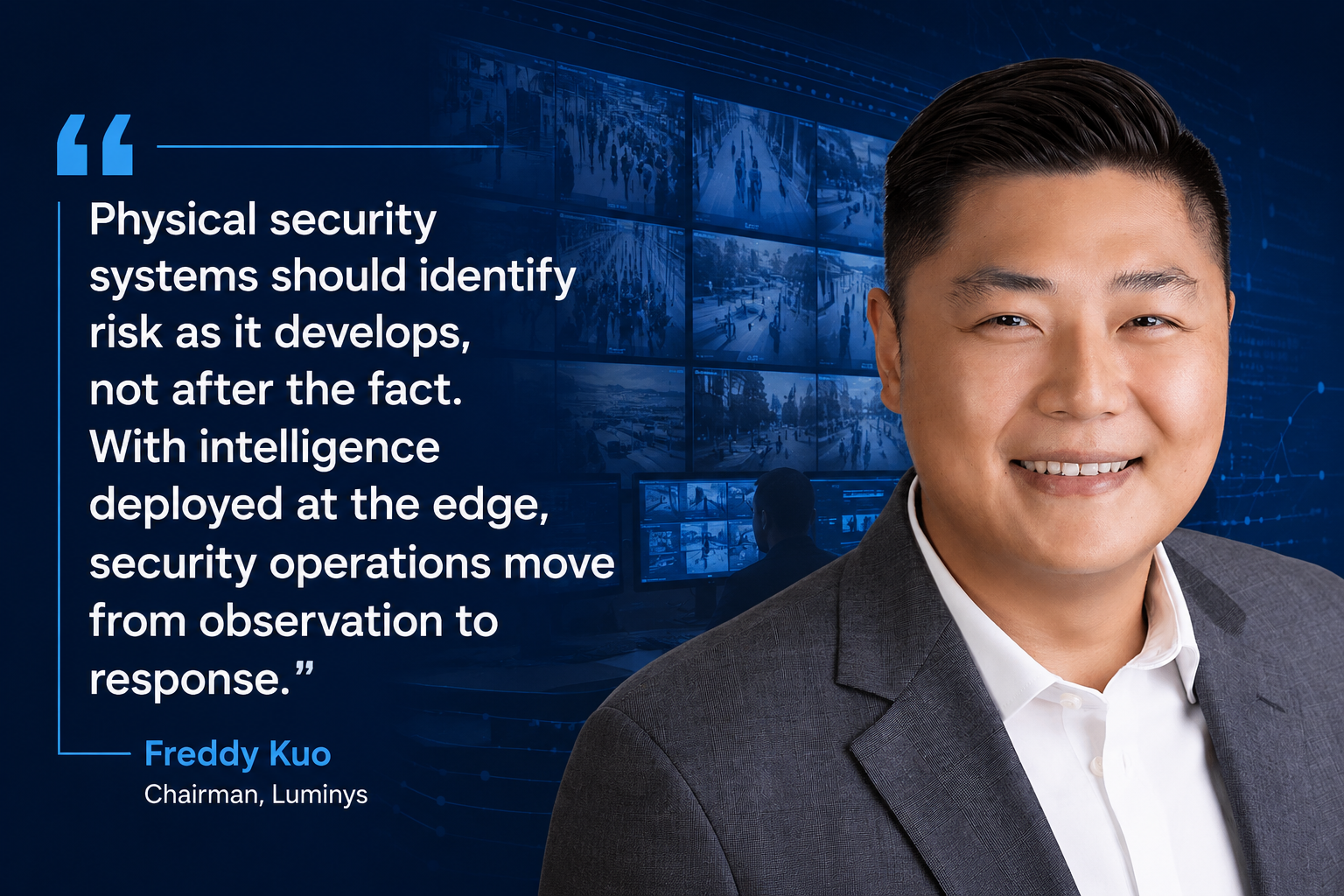
The objective is straightforward. Physical security systems should identify risk as it develops, not after the fact.
With intelligence deployed at the edge, security operations move from observation to response. For organizations responsible for critical facilities and infrastructure, that shift defines the next phase of physical security.
About the Author: Freddy Kuo, Chairman of Luminys

Freddy Kuo is a seasoned technology executive with a robust track record in leading supply chain management, global manufacturing strategy, and strategic investments to drive market expansion for publicly listed companies. Currently, he serves as Executive Office Special Assistant at Foxlink. Foxlink is renowned for designing and producing a diverse range of electronic components for major global brands. Additionally, he holds the position of Chairman of the Board of Luminys Systems Corp. (Luminys), a U.S.-based subsidiary of Foxlink that specializes in video security and smart building solutions.
He also serves as Executive Director of Ubilink.AI, a joint venture between Foxlink, Shinfox Energy, and cloud provider Ubitus K.K. At Foxlink, he spearheaded the development and execution of manufacturing and business strategies that fuel global growth as the company ventures into new sectors. He oversees all investment activities, including M&A and strategic investments, with a particular focus on the U.S. and North American markets.
Video Overview
Infographic
Follow Brilliance Security Magazine on LinkedIn to ensure you receive alerts for the most up-to-date security and cybersecurity news and information. BSM is cited as one of Feedspot’s top 10 cybersecurity magazines.