

Modern organizations rarely operate in isolation. From cloud and managed service providers to payroll platforms and software vendors, third-party relationships have become essential to business efficiency. However, every external partnership introduces another point of vulnerability. When a vendor experiences a security failure, the consequences often extend beyond its own environment, placing companies directly in the path of cyberthreats.
The Hidden Risks of Third-Party Relationships
Third-party vendors generally require privileged access to sensitive systems, customer information or internal infrastructure. While this enables operational efficiency, it also expands the organization’s attack surface.
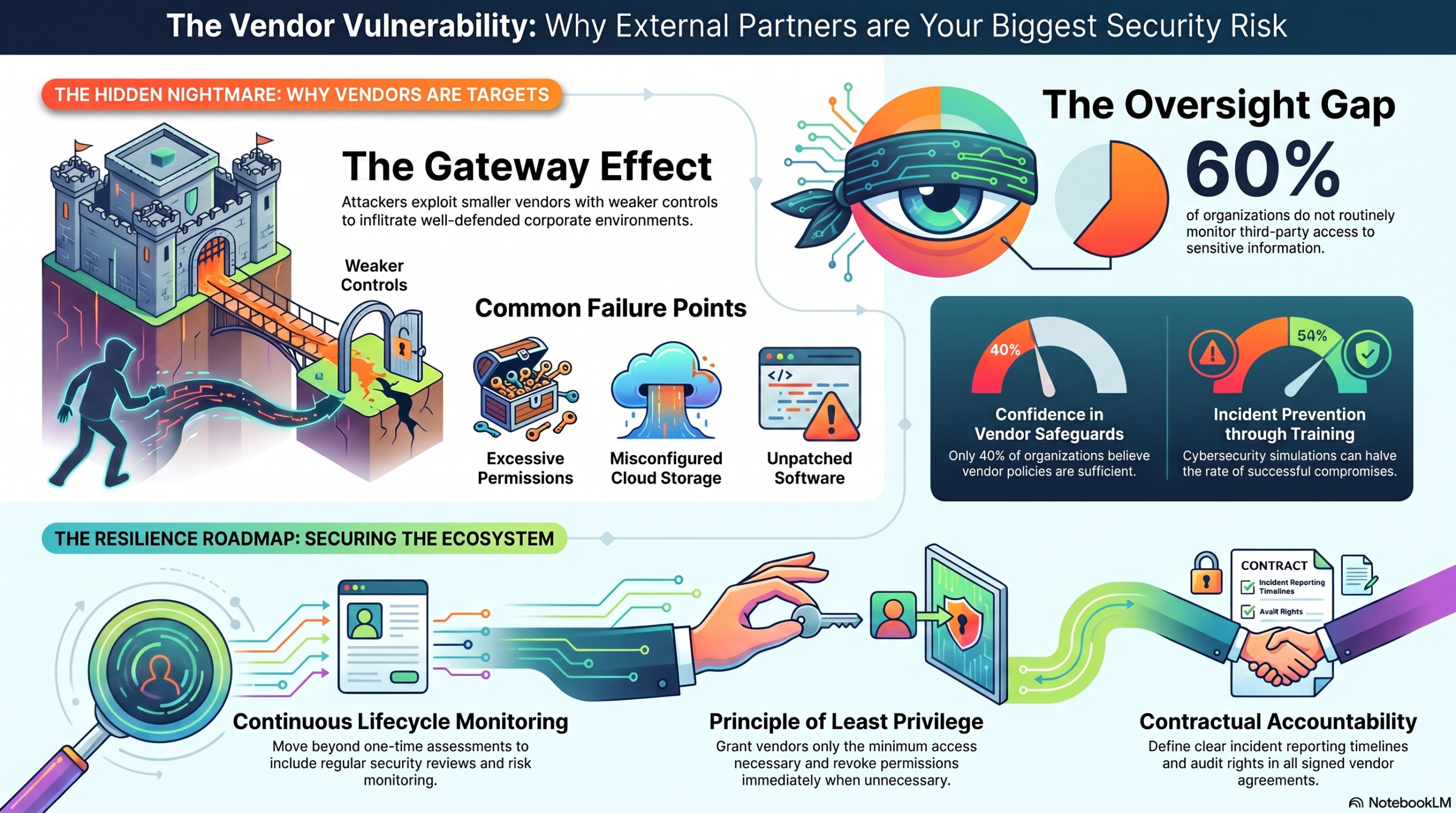
Cybercriminals increasingly exploit trusted vendors because they often provide a gateway into multiple companies simultaneously. Rather than attacking a well-defended enterprise directly, attackers may target a smaller vendor with weaker security controls.
Once the vendor is compromised, trusted connections can be used to infiltrate customer environments. This interconnected ecosystem means that a company’s security posture depends on its internal security and the cybersecurity maturity of external partners. One study shows that only 40% of respondents believe their third parties’ data safeguards and security policies are sufficient to prevent a data breach.
Common Vendor Security Failures
Several recurring mistakes can transform a trusted vendor into a significant security liability.
Weak Access Controls
Vendors sometimes receive excessive permissions that exceed their operational requirements. Shared accounts, poor password management and the absence of multifactor authentication increase the likelihood of unauthorized access. If an attacker compromises vendor credentials, privileged access may grant entry to critical business systems.
Misconfigured Systems
Cloud storage buckets, exposed databases, improperly configured servers and unsecured application interfaces remain common causes of data exposure. Even a simple configuration error can leave confidential information publicly accessible, creating opportunities for attackers to exploit sensitive assets.
Delayed Security Updates
Some vendors fail to patch software or maintain current operating systems. Known vulnerabilities provide attackers with reliable entry points, especially when exploit code is publicly available. Organizations relying on outdated partner infrastructure may unknowingly inherit these security weaknesses.
How Vendor Mistakes Become Organizational Threats
A compromised vendor can disrupt business continuity, expose intellectual property and trigger regulatory investigations. For example, ransomware operators frequently compromise service providers to distribute malicious software across multiple clients. Attackers may use stolen vendor credentials to bypass perimeter defenses because trusted connections often receive fewer security restrictions.
Data breaches originating from third parties may still result in compliance violations, financial penalties, contractual disputes and reputational damage, even if the organization itself did not cause the initial security failure. Corporations have become victims of data breaches that resulted in millions of dollars in compensation.
Building a Strong Vendor Cybersecurity Program
Reducing third-party risk requires a structured and ongoing approach rather than a one-time assessment during vendor selection.
Conduct Comprehensive Due Diligence
Organizations should perform thorough due diligence before entering into any business relationship. Security questionnaires, independent audit reports, compliance certifications, penetration testing results and documented security policies provide insight into a vendor’s cybersecurity maturity.
Continuously Monitor Vendor Security
Vendor security should be continuously monitored throughout the relationship. Cyberthreats evolve rapidly, and a vendor that met security expectations during onboarding may develop new vulnerabilities over time. Regular security reviews, risk assessments and monitoring services help identify changes before they become incidents. This is vital, as 60% of organizations don’t routinely monitor third-party access to sensitive information.
Establish Clear Contractual Security Requirements
Written and signed contracts are vital when dealing with an outside vendor to avoid cybersecurity risks and undue stress. Contractual agreements should clearly define expectations. Security requirements should include incident reporting timelines, encryption standards, access management practices and audit rights. Well-defined contractual obligations establish accountability and reduce ambiguity during security incidents.
Enforce the Principle of Least Privilege
Organizations should grant vendors only the minimum level of access necessary to perform their responsibilities. A majority of successful cyberattacks exploit human behavior rather than security systems. Access permissions should be reviewed regularly and revoked immediately when contracts end or responsibilities change, reducing the risk of unauthorized access.
Include Vendors in Incident Response Planning
Incident response planning should account for third-party scenarios. Security teams should understand how vendors will communicate breaches, share information and coordinate recovery efforts. Establishing these processes in advance significantly improves response times and minimizes the impact of security incidents. Cybersecurity training and simulations can reduce risk by halving the rate of successful compromises within six months.
Turning Vendor Risk Into Resilience
Third-party vendors are essential to modern business operations, but they also introduce significant cybersecurity risks. Prioritizing vendor cybersecurity through due diligence, continuous monitoring, strong contractual safeguards and limited access privileges reduces third-party vulnerabilities and builds a more resilient security posture against evolving cyberthreats.

Devin Partida is a frequent contributor to Brilliance Security Magazine, an industrial tech writer, and the Editor-in-Chief of ReHack.com, a digital magazine for all things technology, big data, cryptocurrency, and more. To read more from Devin, please check out the site.
Additional Resource
Video Overview
Follow Brilliance Security Magazine on LinkedIn to ensure you receive alerts for the most up-to-date security and cybersecurity news and information. BSM is listed among Feedspot’s top 10 cybersecurity magazines.